Advanced Local SEO Optimization Strategies for Competitive Markets in 2026
By Richa Sharma15-Oct-2026
Table of Contents
Home » Blog » Advanced Local SEO Optimization Strategies for Competitive Markets in 2026
Ranking in a crowded city is hard. Every competitor has a Google Business Profile, a handful of reviews, and a website that mentions the city name. Basic local SEO optimizationno longer sets a business apart when dozens of rivals fight for the same three map pack spots. Owners need deeper tactics that prove real local relevance to Google and to buyers. This guide covers competitor research, profile and website upgrades, review and link strategy, AI search readiness, and how to pick the right support in 2026.
Request a free local SEO competitor analysis see which gaps keep your rivals ahead of you.
Why Basic Tactics Stop Working in Competitive Local Markets in 2026
Ten years ago, a claimed profile and a few directory listings could land a business in the map pack. Those days are gone. More businesses now compete for each search, and AI-powered results pull from a wider set of signals than a simple checklist covers. Searchers also expect more. They read reviews, compare services, and check hours before they tap a result.
A checklist proves you did the minimum. It does not prove you deserve the top spot. Google compares reviews, content depth, links, and engagement across every rival. Businesses that stop at the basics tie with everyone else and lose on the details. Owners who treat the basics as the finish line often wonder why a newer, smaller rival keeps outranking them in the same neighborhood. Map pack visibility now goes to the brand that shows the strongest proof of local trust.
What Local SEO Services Include Once You Move Past the Basics
Strong local SEO services start with a competitor gap analysis. The team studies who ranks, why they rank, and what you must add to catch them. Next comes entity building, which links your business name, address, services, and people across trusted sources so search engines know exactly who you are and what you offer.
Advanced on-page work follows. That means better titles, richer service copy, schema, and clean internal links. Maintenance tasks keep a profile alive. Growth strategy moves it up. Many businesses pay for the first and wonder why the second never happens. Ask any provider which tasks fall into each group before you agree to a plan. Clear scope protects your budget, sets honest expectations, and makes every monthly report easier to judge.
How a Local SEO Company Analyzes Competitors in Crowded Markets
A good organiclocal SEO company reviews the top competitors one by one. It checks their profiles, reviews, backlinks, and service pages. It also notes how often they post, how fast they answer reviews, and which neighborhoods they target. Each finding shows where a rival is strong and where it is weak.
Then the team turns every gap into a task and ranks the tasks by impact and effort. You get a short, clear list instead of a vague plan. The first item often brings the fastest gain, such as a missing service page or a thin review count. The list also keeps your budget focused on moves that matter. Over time, the same process shows you when a rival slips, so you can move in before the gap closes.
Pro Tip: Study the top three map pack competitors for each service and city, then list what they have that you lack, such as review volume, service pages, or local links, before choosing where to invest first.
Comparison Table 1: Basic vs Advanced Local SEO Strategies
The table below shows how the two approaches differ in the areas that decide results in a tough market. Use it to judge which level your market demands before you set a budget. Most owners see their own situation in one column right away.
Factor
Basic Local SEO
Advanced Local SEO
Scope of work
Profile setup, citations, and simple page fixes
Gap analysis, entity building, content, links, and review growth
Competitive depth
Low, with little rival research
High, built around live competitor data
Expected timeline
1 to 3 months for a first lift
4 to 9 months for steady map pack gains
Best fit market type
Small towns with few strong rivals
Dense cities with many established rivals
Moving from basic to advanced does not mean starting over. Keep your profile and citations, then layer competitor research, content, and links on top.
Advanced Google Business Profile Optimization for Competitive Markets
Your profile is often the first thing a buyer sees. Pick the most precise primary category, then add every secondary category that fits. List each service and product with a clear description. Post updates on a steady schedule, and answer the Q&A section yourself so buyers get accurate facts before a competitor can fill the gap. Add high-quality photos each month, since profiles with fresh images earn more taps and calls.
Consistency matters as much as detail. Your name, address, phone number, hours, and services must match your website and every listing. A small mismatch creates doubt for search engines and for customers. Audit all three sources each quarter and fix differences the same week you find them. Consistent data also helps AI tools quote your business correctly.
SEO for Local Business Websites: Location and Service Pages That Rank
SmartSEO for local business websites gives each location and each service its own useful page. A copied template with a swapped city name adds nothing. Write real details instead, such as the areas you serve, the problems you solve there, and the steps a customer should expect when they call.
Build proof into every page. Add project photos, testimonials, and team bios from that location. Link related pages to each other so search engines see how your services connect. Add local business schema so crawlers read your address, hours, and services without guessing. Pages built this way give buyers and crawlers the same clear signal about where you work.
Review Strategy: Earning, Answering, and Using Reviews as a Ranking Signal
Ask every happy customer for a review, and make the process easy with a direct link. Steady requests beat one big push, because Google values recent feedback. Reply to every review, good or bad, within a day or two. Use the customer’s name and a detail from the job to show that a real person read the review. A calm, specific reply to a bad review shows future buyers how you handle problems.
Review text also carries weight. When customers mention a service and a neighborhood, they reinforce your local relevance. Ask them to describe what you did for them, not to repeat keywords. Natural detail reads better and ranks better. Share standout reviews on your site and profile to strengthen trust at the point of decision. Keep the tone friendly and honest, even when the review stings.
Local Links and Citations That Build Real Authority
Relevant local links beat bulk citation submissions. A mention from the chamber of commerce, a local news site, or a sponsored youth team tells Google your business belongs in the community. Look for partnerships, events, and charity work that earn a link with a real story behind it. Strong local SEO optimizationtreats every link as proof that real people in your community trust you.
Keep citations clean, but stop short of mass directory spam. List your business on trusted directories and industry sites, then check each entry for accuracy. Ten strong, relevant links will do more than five hundred weak ones. Quality shows up in rankings, and it also sends real visitors to your site. Track each new link and note which ones bring traffic, so you can repeat what works.
Expert insights from
– Mamta SEO manager
“Competitive markets are won through consistent trust signals, not one-time fixes. The business that earns reviews, links, and useful content every month pulls ahead of the one that does a big push and disappears.”
How Local Businesses Earn Visibility in AI Answers and the Map Pack
AI answers pull from clear, structured information. Write plain service descriptions, keep your business data the same across every platform, and answer common customer questions on your pages. When your facts agree everywhere, AI tools can repeat them with confidence. This also helps your map pack position, since both systems reward clarity. Short, direct answers on your pages give AI tools quotable facts to pull.
Strong local fundamentals support both results. Redefining Webhas helped local brands organize service content, clean up business data, and build the trust signals that map results and AI answers both ways. That work gives a business one solid base instead of two separate projects. The result is a profile, a site, and a data set that all tell the same story.
How a Local SEO Services Company Handles Multi-Location and Hyperlocal Targeting
A skilledlocal SEO services companygives each location its own profile, its own page, and its own tracking. This keeps data clean and shows which branch needs help. Each branch then answers for its own results. It also avoids the mess that comes from sending every location to one shared page. Avoid copying text between pages, since duplicate content waters down every location.
Hyperlocal targeting adds neighborhoods and service areas without thin content. Each page needs a reason to exist, such as a landmark, a local project, or a team member who works in that area. Proper local SEO optimizationtreats every location as its own small market with its own rivals.
Pro Tip: Build each location page around real details such as local landmarks, team members, and nearby projects, so every page earns its place instead of competing with your other locations.
White Label Local SEO Services for Agencies Scaling Client Work
Agencies grow faster when they add specialists without hiring a full team. White label local SEO services let a partner deliver the work under your brand. Your client sees your name on every report, and your partner handles profiles, content, links, and review support behind the scenes. Clients get faster delivery, and you keep the relationship.
Choose a partner with care. Ask for sample reports, case studies in competitive markets, and a clear process for quality checks. Confirm who talks to your client, how fast the team responds, and what happens when results dip. A weak partner can hurt your reputation faster than any other mistake. Start with one pilot client before you move your whole book of business.
Comparison Table 2: In-House vs. Agency vs. White Label Local SEO
Each model fits a different business stage. This table compares the four factors that matter most when you decide who should run the work. Pick the model that matches your budget, your goals, and how fast you want to grow.
Factor
In House
Agency
White Label
Cost
High, with salaries and tools
Moderate monthly fee
Lower, set at wholesale rates
Scalability
Slow, limited by headcount
Steady, tied to the contract
Fast, built for many clients
Expertise depth
Narrow, one or two people
Broad, a full specialist team
Broad, a partner team behind your brand
Reporting control
Full control
Shared control
Full control under your brand
No model wins every time. A business with a strong internal team may prefer in-house work, while an agency with a growing client list often gains the most from a white-label partner.
Local SEO Consulting: When Strategy Guidance Is Enough
Some businesses already have a marketing team that can execute. They need direction, not extra hands. Local SEO consulting gives them a clear roadmap, a review of current work, and advice on priorities. The team keeps control, and the consultant fills knowledge gaps. This option costs less than full management and keeps knowledge inside your team.
Full execution becomes the better choice when the team lacks time or skill. If tasks sit unfinished for months, advice alone will not move rankings. Watch your own progress. When strategy calls produce plans but no results, hand the work to a team that can do it. Be honest about your team’s real capacity.
What the Best Local SEO Services Include in a Competitive Package
The best local SEO servicescover every part of the local ranking system. A strong package includes:
Google Business Profile management and updates
Location and service page content
Local link building and sponsorship outreach
Review requests and response support
Monthly reports tied to calls, visits, and leads
Packages should scale with market difficulty. A small town needs less work than a city with fifty rivals. Ask what changes as the market gets harder, and make sure the price reflects real hours of work. A package that looks the same for every client signals a shortcut. Ask the provider to show how a package changed for a past client in a harder market.
How to Hire Local SEO Expert Support Without Wasting Budget
Before you hire a local SEO expert,help review the portfolio and ask for local case studies. Look for results in markets as tough as yours. Pay attention to how the person communicates. A clear, honest answer in the first call predicts how the next twelve months will go.
Ask direct questions. How would you rank us against the top three rivals? What did you do for a client in a similar market? What would you fix first, and why? Real experts answer with specifics. Weak providers answer with buzzwords and promises. Take notes on each answer and compare two or three providers side by side before you decide.
Did You Know? Many local SEO providers use the same playbook for every client, which is why asking for market-specific examples is one of the fastest ways to spot real expertise.
Red Flags That Signal a Weak Local SEO Provider
Walk away from anyone who guarantees rankings. No one controls Google, and honest providers say so. Vague reporting is another warning sign. If a monthly report shows traffic charts but no calls, direction requests, or form fills, the provider hides weak results. Ask for a sample report before you sign, since it shows what you will actually see each month.
Watch for these additional problems:
Bulk directory spam sold as a strategy
A proposal with no competitor analysis
Long contracts with no exit terms
Refusal to share account access or content ownership
A proposal without competitor research shows the provider has not studied your market. That alone is reason enough to look elsewhere.
How to Measure Local SEO Results in Competitive Markets
Track map pack rankings, phone calls, direction requests, and form fills. These numbers show real buyer interest. Overall site traffic can rise while leads stay flat, so never trust it alone. Set up call tracking and conversion goals before the work starts, so you have a clean baseline. Write down your numbers before launch, so progress is easy to prove.
Break results down by location and by service. A rise in one city can hide a drop in another. Review each segment monthly and compare it to the prior period. Share the data with your provider and ask what each change means. Good partners explain the numbers in plain words. Clear reporting turns raw numbers into better decisions.
Common Mistakes Businesses Make in Competitive Local SEO
Many owners ignore reviews, copy their competitors, or let business details drift out of sync. Copying a rival only makes you the second-best version of that rival. Study what works, then add something they do not offer. Inconsistent names, phone numbers, and hours confuse both search engines and customers. Small errors add up and quietly cost you calls every week.
The biggest mistake is to treat local SEO as a one-time project. Rankings shift as rivals publish, earn links, and collect reviews. A business that stops working loses ground within months. Plan for steady effort, and budget for it the same way you budget for rent or payroll.
Questions to Ask a Local SEO Services Company Before You Sign
Start with the method. Ask how the team finds opportunities, what work happens in the first ninety days, and how it adjusts when results stall. Ask how often it sends reports and what those reports include. A clear answer shows a real process.
Then ask about ownership and flexibility. Who owns the profile, the content, and the links if you leave? Can you cancel with notice? What timeline is realistic for your market? A fair company gives straight answers and puts them in writing. Ask for references from clients in similar markets and call at least one.
Building a Long-Term Local SEO Plan for 2026 and Beyond
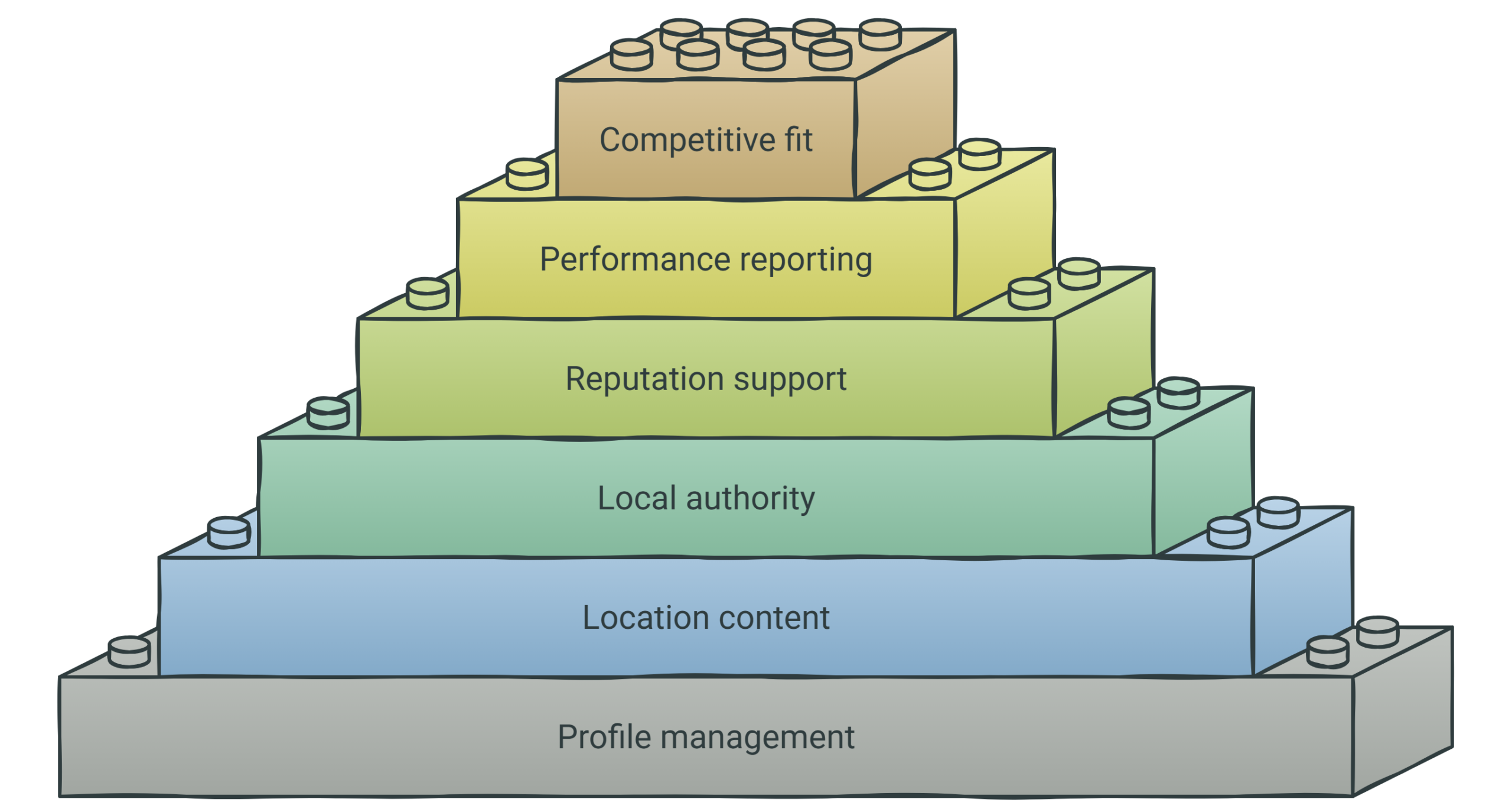
Sequence the work in a logical order. Fix your profile and website first, then publish location and service content, then build links and reviews. Each layer supports the next. Rushing links before the site is ready wastes money and weakens results. Set clear goals for each quarter so the team knows what success looks like.
Review the plan every quarter. Check rankings, leads, and costs, then shift effort toward the tactics that work. Drop what does not. Markets change, and your plan must change with them. A written roadmap keeps your team and your provider on the same page. Treat each review as a chance to sharpen your next quarter.
Conclusion
Competitive markets reward businesses that go beyond the basics. Smart local SEO optimization combines a sharp profile, useful location pages, steady reviews, relevant links, and expert support, and each piece works best when the others are in place. Redefining Web has guided local brands through this exact process, and the results show up in stronger rankings and more calls from real buyers. Start with a clear plan, track real results, and keep improving every quarter.
Book a consultation
Request a custom local SEO growth plan to start winning your market in 2026.
Frequently Asked Questions About Local SEO Optimization
Advanced local SEO goes past profile setup and citations. It adds competitor analysis, entity building, unique location pages, link earning, and review strategy. Basic work gets you listed. Advanced work helps you outrank rivals. It also builds the trust signals that make Google show your business first.
Most businesses see early movement in 3 to 4 months. Strong, steady map pack results often take 6 to 9 months. Speed depends on your rivals, your starting point, and how consistently you do the work. Expect the first gains to be small and the later gains to build fast.
Prices vary by market and scope. Many small businesses pay between $500 and $2,500 per month. Competitive cities and multi-location brands often pay more. Always ask what the fee covers. Ask for a written scope so you know which tasks you pay for each month.
Yes. Each location needs its own Google Business Profile and its own page with unique details. Separate pages and tracking show which branch performs well and needs work. This also stops your locations from competing against each other.
Yes. Review count, rating, recency, and content all influence map pack positions. Reviews also persuade buyers. A business with strong, recent feedback wins more clicks and calls. Ask every customer for feedback soon after the job.
White label services are local SEO tasks that a partner completes under another brand. Marketing agencies, web designers, and consultants use them to serve more clients without hiring more staff. The partner stays hidden, so the agency owns the client relationship.
Hire an expert if you need focused guidance and have a team to execute. Choose a company if you need profile work, content, links, and reporting handled together. Match the choice to your time and skills. Many owners start with an expert and move to a company as they grow.
Yes. AI answers pull from clear, consistent business data and helpful content. The same work that improves map pack rankings, such as accurate listings and strong service pages, also improves your chances of appearing in AI answers. Clear service pages and steady reviews give AI tools facts they can trust.
Hi, I’m Richa Sharma, a digital marketing professional with 8+ years of experience in SEO and online marketing. I currently work as an SEO Manager at Redefining Web, where I help businesses improve their Google rankings, website traffic, and online visibility. I have experience in SEO, social media marketing, keyword research, Google Analytics, and content optimization. I enjoy creating smart marketing strategies that help brands grow online and reach more customers. I am passionate about learning new digital trends, working with teams, and helping businesses achieve better online results.
Know your website’s SEO Score.
Get a customized SEO Audit report & improve your website statistics.





 Chat on WhatsApp